
Upgrade Your Existing Home
Retrofit Insulation Solutions
Improve energy efficiency in existing homes without major renovations. Our retrofit insulation methods work around finished spaces and existing construction.
Retrofit Insulation for Existing Homes
Many Long Island homes were built before energy codes, and many have empty walls or a thin attic. Retrofit insulation adds insulation to the house you have without opening up walls and ceilings.
We blow insulation into closed walls through small holes, add it over the attic floor after air sealing, and work around finished rooms. How much you save depends on the house; see below.
Retrofit Insulation Methods
Dense Pack Cellulose
Blown-in cellulose that fills wall cavities completely through small access holes.
Applications:
Exterior walls, Closed floor and ceiling cavities, Hard-to-reach spaces
Air Sealing
Sealing the gaps in the attic floor, top plates and rim joists before the insulation goes in.
Applications:
Attic floors, Rim joists, Attic hatches
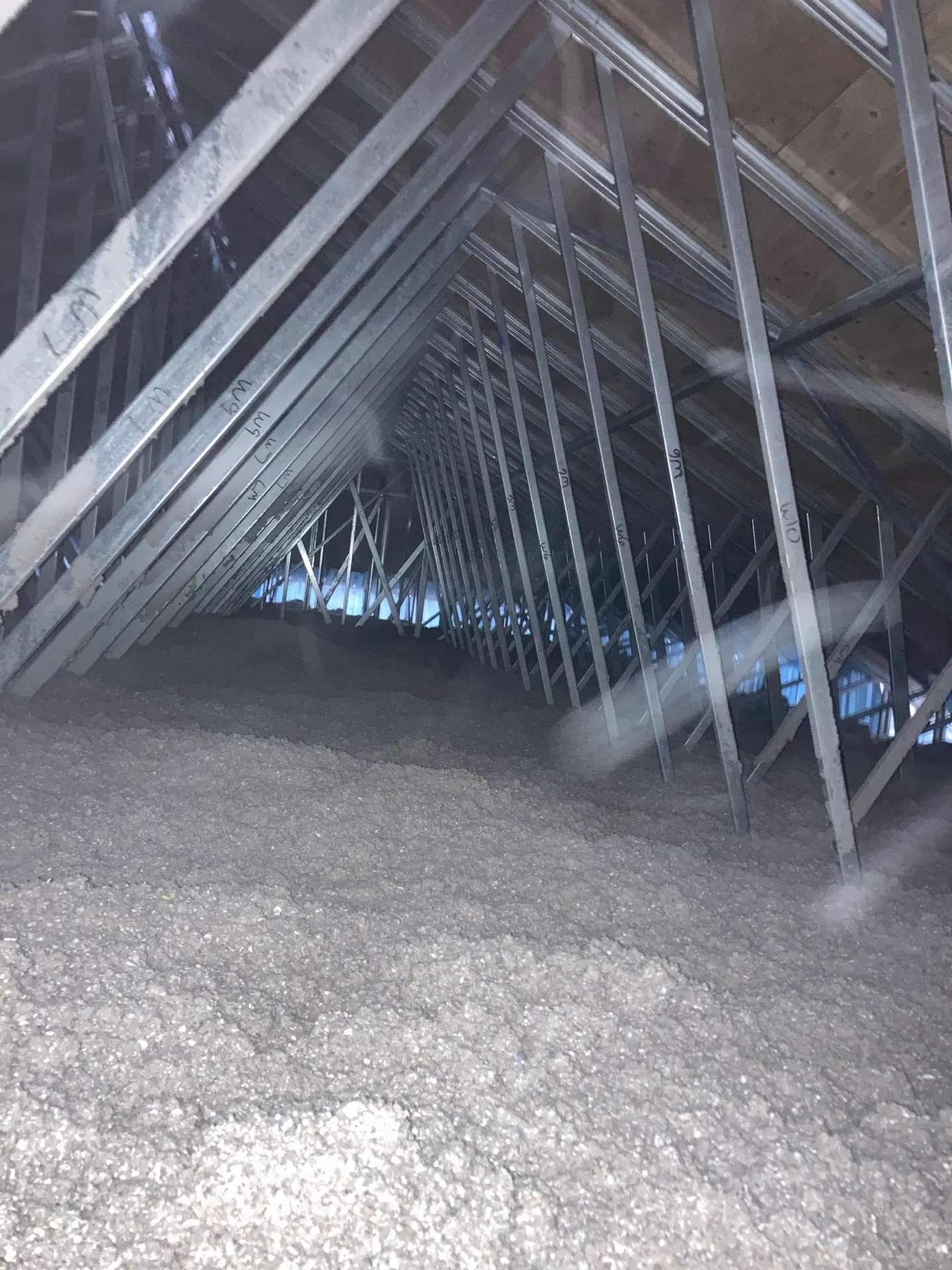
Blown-In Fiberglass
Loose-fill fiberglass insulation for attics and large open spaces.
Applications:
Attic floors, Knee-wall attics, Hard-to-reach attic corners
Foam Board Panels
Rigid foam panels installed on exterior walls or in unfinished basements.
Applications:
Basement walls, Knee walls, Exterior retrofits
Spray Foam Retrofits
Spray foam where a spot needs air sealing and insulation in one layer. We use it only when the job needs it.
Applications:
Rim joists, Crawl space walls, Shallow sloped ceilings
Radiant Barriers
Reflective foil under the roof can cut summer heat from a sunny roof. It adds no R-value and needs an air space, so it goes with attic insulation, not instead of it.
Applications:
Underside of roof rafters, Facing an air space
Retrofit Insulation Process
Assessment
Look at the walls, attic and existing insulation to find the best way to add more.
Planning
Make a detailed plan showing where the access holes go and where the insulation goes.
Access Creation
Drill small holes or open access points to put the insulation in.
Installation
Carefully install the insulation with the right equipment and methods.
Verification
Check that the insulation has the right density and coverage.
Restoration
Plug and patch the access holes.
Retrofit vs. Renovation
Retrofit Insulation
- Work around existing finishes
- No demolition required
- Lower cost and disruption
- Can be done in occupied homes
Full Renovation
- Remove existing finishes
- Major construction disruption
- Higher cost and time investment
- May require temporary relocation
Retrofit work skips the demolition and refinishing a renovation needs.
How Much Will a Retrofit Save on Energy?
Insulation and air sealing are often among the most cost-effective ways to cut energy waste in an existing home. How much you save depends on the house:
What's There Now
An empty attic or wall gains far more than one that's already half full.
Your Fuel and Rates
Oil, gas and electric heat save differently.
Air Sealing
Sealing the gaps first makes the insulation work harder.
Paramount Insulation gives free estimates for insulation work in Nassau and Suffolk counties. We don't do rebate-program work. For utility rebates or a whole-home energy assessment, contact PSEG Long Island, National Grid, or the Long Island Regional Clean Energy Hub. You can also see our guide to where Long Island homeowners check for rebates. Program details change often, so check eligibility directly with PSEG Long Island or NYSERDA.
Related Guides
- Empty walls? Read about dense-pack wall insulation.
- Most efficiency upgrades start in the attic. See attic insulation.
- Looking for a rebate? See where to check for Long Island energy rebates.
Upgrade Your Home's Insulation
Ask Joe what your attic and walls need. Free estimate and diagnosis across Nassau and Suffolk.